

How to Become a Business Consultant?
Have you ever wondered how some people help businesses grow while building a successful career? Becoming a business consultant is more than just giving advice. It’s a process where you keep learning, get real experience, find your own area to focus on, and develop the skills that actually make a difference.
To be a business consultant, you need to have knowledge, get some hands-on experience, and make wise plans. You also need to create trust with clients or employers. This guide will show you how to start and expand your career in business consulting, whether you want to work for a top consulting firm or start your own business.
What Does a Business Consultant Do?

A business consultant is someone who helps companies run better and solve the problems they have. They use their skills and knowledge to guide businesses toward better performance, smarter decisions, and growth. In simple words, a business consultant helps companies fix problems, work more efficiently, and reach their goals.
As a consultant, your work could include:
- Advising on business strategies and planning
- Making operations run more smoothly
- Helping with finances, budgeting, or investments
- Supporting human resources and helping teams grow
- Using technology or IT tools to improve how things work
Consultants can work in big companies, small local businesses, or on their own as freelancers. The main idea is to understand the problems a business has and give solutions that really make a difference.
If you want expert guidance on starting your consulting journey, Milan Khatiwada, an experienced business consultant in Nepal, can help you plan your career and connect with the right opportunities.
Do You Need a Degree to Become a Business Consultant?
No, you don't really need a degree to work as a business consultant. But it's a good idea to have one because it can help you gain the trust of clients and businesses. A degree indicates that you know the basics, provides you credibility, and can help you secure major jobs. You don't need a degree to work as a business consultant. Your talents, expertise, and ability to generate genuine results are what really count.
Many successful consultants got their start by working, having their own business, or becoming a manager instead of going to school. You can also gain credibility through certifications, bootcamps, or specialized training programs. Here’s how you can approach it:
Most clients and employers prefer consultants with a bachelor’s degree. Useful fields include:
- Business Management
- Marketing
- Economics
- Finance
- Engineering (especially for operations or IT consulting)
A master’s degree, like an MBA, can accelerate your career, particularly if you aim to work with top consulting firms. But it’s not mandatory; you can still succeed with experience and proven skills.
Alternative Paths Without a Degree
If you don’t have a degree, gain experience through management roles, running your own business, volunteering, or taking on project-based work. Bootcamps and certificates, such as Data Analytics or Digital Marketing, can help you learn valuable skills quickly.
Earn Certifications
Certifications help clients trust your expertise. Popular options include:
- Certified Management Consultant (CMC)
- Project Management Professional (PMP)
- Lean Six Sigma
- Certified Business Consultant
Bottom line: A degree is not mandatory, but it helps build trust with clients and firms. If you don’t have one, focus on gaining skills, experience, and certifications to prove your value as a business consultant.
Recommended Read: What does a Business Consultant do?
5 Steps to Become a Business Consultant
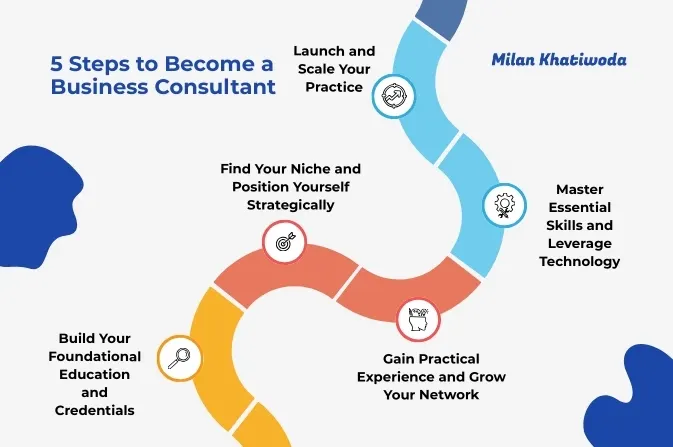
The easiest method to learn how to become a business consultant is to follow a clear set of steps. To be a good consultant, you need to do more than just know things. You also need to get experience, learn new talents, establish your niche, and win clients' trust. This is a basic guide to help you get started and expand your consulting business.
Step 1. Build Your Foundational Education and Credentials
Having the necessary education and credentials offers you a strong base. It shows clients and employers that you know what you're talking about and makes it more likely that you'll get outstanding job offers. A degree isn't required, but it does help you gain credibility and trust.
Getting certifications like Certified Management Consultant (CMC), PMP, or Lean Six Sigma can also help you look better as a professional and give clients greater faith in your skills.
Step 2: Find Your Niche and Position Yourself Strategically
Many new consultants make the mistake of trying to serve everyone. The key is to find a niche where your skills and experience truly shine. Popular consulting specialties include:
- Strategy Consulting: Helping companies with long-term planning and business goals
- Management Consulting: Improving processes, efficiency, and overall performance
- Financial Consulting: Guiding businesses with budgeting, investments, and financial health
- Operations Consulting: Streamlining internal workflows and improving productivity
- HR Consulting: Supporting workforce management, employee development, and organizational change
- IT Consulting: Advising on technology, data analytics, and cybersecurity
Before settling on a niche, talk to potential clients about their challenges. Make sure it’s work you enjoy and that the market is willing to pay for your expertise. A clear positioning statement can make you stand out.
Recommended Read: Market Research and Business Insight Services
Step 3. Gain Practical Experience and Grow Your Network
Experience is everything in consulting. You can start by:
- Working at a consulting firm or doing internships
- Volunteering or taking on pro bono projects for small businesses or nonprofits
- Taking on strategic tasks in your current job
Get comfortable using tools like Oracle PeopleSoft (ERP) or Salesforce (CRM). These are commonly used in consulting to manage business processes and client relationships. Networking is just as important.
Go to industry events, conferences, or local meetups, and don’t be shy about connecting with people.
Fun fact: around 60% of consultants land their first client through referrals. Building genuine relationships can open doors you didn’t even know existed.
Step 4. Master Essential Skills and Leverage Technology
Being a great business consultant isn’t just about what you know; it’s about the skills you bring to the table. Focus on developing these key abilities:
- Analytical Thinking: Look for patterns and find solutions to complex business problems
- Business Acumen: Understand important business concepts and strategies that drive success
- Communication and Presentation: Explain your ideas clearly and make your points memorable with visuals
- Interpersonal Skills: Build trust, negotiate effectively, and work well with clients and teams
Don’t be intimidated by AI. Think of it as a helpful tool that can handle routine tasks like research, data analysis, and drafting documents. This gives you more time to focus on high-level strategy, creative problem-solving, and building strong client relationships.
Recommended Read: How to Choose the Right Business Consultant in Nepal?
Step 5. Launch and Scale Your Practice (For Independent Consultants)
If you want to work independently, follow these steps to build and grow your consulting business:
- Choose a Business Model: Decide between being a solo consultant, building a consulting firm, or offering a productized service
- Set Fees Strategically: Value-based pricing earns more than hourly rates. Beginners can start with project-based pricing
- Build Your Marketing Engine: Use content marketing, networking, speaking engagements, and thought leadership to attract clients
- Master the Sales Process: Follow a clear framework—Discovery, Diagnosis, Prescription, Proposal, Partnership. Offering three proposal options helps clients say yes faster
- Plan Operations & Secure Insurance: Create a simple business plan, set up essential tools, and protect your practice with liability insurance
With consistent effort, over 50% of consultants reach their previous employee income within two years. Those who invest in coaching or mentorship can accelerate results by 40–60%.
Recommended Read: What is SME?
Tips to Become the Best Business Consultant

Becoming a top business consultant takes more than just knowledge—it’s about continuously growing and building trust with your clients. Here are some tips to help you stand out:
- Keep Learning: Stay updated with the latest trends, tools, and strategies in your field. Upskilling regularly helps you stay relevant and effective.
- Personal Branding: Build a strong reputation both online and offline. Share your expertise through content, speaking engagements, or networking so clients recognize you as a trusted expert.
- Client Management: Communicate clearly, listen carefully, and maintain strong relationships. Happy clients are your best source of referrals and long-term opportunities.
- Take on Challenges: Don’t shy away from complex projects. The more challenging work you take on, the faster you grow and develop your skills.
Even experienced consultants keep learning. Consulting is a career of continuous growth, impact, and the chance to help businesses succeed.
Final Thought
Becoming a business consultant is a fun and lucrative path. It's a mix of learning, getting better at things, getting experience, finding your expertise, and meeting the right people. Start with little projects and work on them one at a time. Always try to help your clients succeed.
If you are curious, persistent, and dedicated, you can leverage your knowledge into a job that not only pays well but also makes a real difference. Every step you take puts you closer to being a consultant that businesses can trust and who really helps them.
Are you ready to take the first step toward a successful career in consulting? Get in touch with Milan Khatiwada immediately for expert advice that fits your needs.
Frequently Asked Questions (FAQs)
It truly depends on where you work and how much experience you have. People who are just starting out can get a good wage, and as they obtain more experience, especially in a specific field, they can make a lot more.
It usually takes people between two and five years to get settled in. How rapidly you gain experience, build skills, and grow your professional network will determine how long it takes.
Not really. An MBA can help you get jobs and make you look more credible, but what clients really care about are your abilities, knowledge, and the results you get.
Yes, for sure. A lot of people start out small with internships, volunteering, or project-based work to build their expertise and reputation before taking on bigger clientele.
Certifications like CMC, PMP, Lean Six Sigma, or Certified Business Consultant might help clients trust your skills, but having real-world experience is just as crucial.