

Key Business Strategy Every Nepali Company Should Know
Nepal’s business world is changing really fast. With more digital platforms and customers wanting new things, companies now have big chances but also some serious challenges. Whether you run a startup, a trading business, an SME, or a growing nationwide brand, having the right plan decides if you move ahead or fall behind.
A lot of Nepali companies face problems because of tougher competition, moving online, old systems, money issues, and not planning for the future. That’s why having a strong business strategy matters. It helps businesses stay steady, grow step by step, and expand in the right way.
This guide will take you through all the key business strategies every Nepali company should know from checking the market to managing money, going digital, building a brand, handling staff, and planning for growth.
What is Business Strategy?
A business strategy is a long-term plan a company uses to reach its goals, stay ahead of competitors, and grow in the market. It shows the direction and helps businesses decide what to focus on, how to use their resources, and how to get an edge over others.
In simple words, a business strategy is like a roadmap that guides a company from where it is now to where it wants to be in the future.
Having a solid strategy helps a company:
- Make clear and confident decisions
- Use time, money, and people in a smart way
- Stand out from competitors
- Grow steadily and keep that growth going
- Be ready for changes and challenges in the market
Without a strategy, businesses often just react to problems as they come instead of moving forward with a clear plan.
Recommended Read: Business Ideas in Nepal
Why Business Strategy Matters for Nepali Companies?

Nepal’s economy mostly depends on small and medium businesses. As the market gets more competitive, companies without a clear plan often find it hard to grow, manage risks, or stay profitable. A good business strategy gives companies the direction and structure they need to do well in this changing market.
A strong strategy helps Nepali companies:
- Save money by avoiding guesswork and unplanned decisions
- Plan finances better and use limited resources wisely
- Make smart choices instead of just reacting to problems at the last minute
- Build a stronger position against local and international competitors
- Grow steadily and stay stable, even when the market is uncertain
Recommended Read: What is SME?
.
Common Mistakes Nepali Businesses Make Without a Strategy
A lot of companies in Nepal face problems just because they don’t have a clear plan. Some of the most common mistakes are:
- Running the business based on guesses instead of real data
- Mixing short-term goals with long-term plans, which causes confusion
- Weak financial planning, leading to money problems
- Poor or unclear branding, making it hard to get noticed
- Relying too much on old-fashioned methods
- Hiring people without checking if they have the right skills, which makes teams less efficient
Ready to take your business to the next level? Connect with Milan Khatiwoda, one of Nepal’s top business consultants, and get expert advice on strategy, growth, and running your business better.
Start building a stronger, smarter business today!
9 Core Business Strategies Every Nepali Company Must Apply
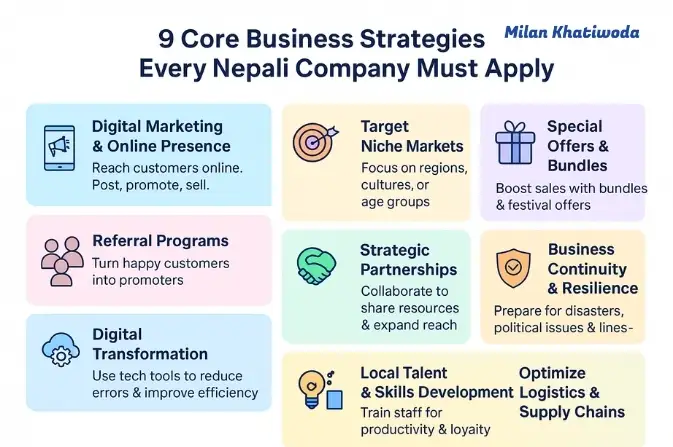
Nepal’s business world is different from other places because of its varied geography, infrastructure problems, and culture that relies a lot on relationships. Digital opportunities are growing, but companies need strategies that are practical, doable, and fit local conditions to succeed in the future.
1. Leverage Digital Marketing and Online Presence
Nepal is going online fast, and having a strong digital presence can really help your sales and make your brand known. Being active on social media, keeping a website, and sending email updates helps you reach customers beyond your local area.
If you’re not online, you might lose customers to competitors who are, especially younger city customers who often search online before buying.
Practical tips:
- Make a website and e-commerce platform that’s easy to find on Google
- Post regularly on social media with updates, promotions, and stories about your business
- Run simple online campaigns, like Facebook or Instagram ads, to reach the right audience
Recommended Read: How to Choose the Right Business Consultant in Nepal?
2. Target Niche Markets
Nepal is very diverse, so a one-size-fits-all approach usually doesn’t work. Focusing on a specific niche, like certain regions, cultural groups, or age ranges, lets you meet customer needs more exactly. This helps you build loyalty and stand out from competitors. Ignoring niche markets can waste time and money on broad campaigns that don’t really connect with your audience.
Practical tips:
- Study local communities to understand what they like and what problems they face
- Customize products or services to fit the needs of a specific region or group
Make marketing messages that fit the culture of the audience you’re targeting
If you are confuse how to do market research, market research and business insight expert, Milan Khatiwoda will help you.
3. Create Special Offers and Bundles
People love deals, and bundling products or giving discounts can boost sales and help move stock faster, especially during festivals or tourist seasons. Bundles make your products more attractive, encourage bigger purchases, and can bring in new customers who might not have thought about your products before. Ignoring this strategy can slow sales, leave stock unsold, and let competitors get your customers with better offers.
Practical tips:
- Combine complementary products into value bundles
- Offer limited-time discounts during festivals like Dashain or Tihar
- Promote these offers both online and in your store so more people see them
4. Implement Referral Programs

Nepalese customers trust advice from friends and family. By rewarding referrals, you can turn happy customers into promoters, which works better and costs less than normal advertising. Ignoring referrals can make you rely more on paid ads and lose the natural trust that word-of-mouth brings.
Practical tips:
- Give discounts or small gifts to customers who refer others
- Encourage happy customers to leave online reviews
- Promote referral programs on social media, your website, and in your store
Recommended Read: FDI Service in Nepal
5. Foster Strategic Partnerships
Working with local companies, e-commerce platforms, or other businesses can help you share resources, reach new customers, and make your supply chain stronger. Good partnerships help you deal with problems like delivery or marketing gaps, while ignoring them can slow growth and make your business more vulnerable to issues.
Practical tips:
- Partner with transport companies to make deliveries more reliable
- Work with complementary brands for joint promotions
- Team up with e-commerce platforms to reach more customers
6. Build Business Resilience with BCM/BCP
Nepal faces natural disasters, political problems, and seasonal disruptions. Making a Business Continuity Plan helps your company keep running during crises and recover quickly afterward. Without a plan, operations can stop completely, customers might go to competitors, and getting back on track becomes expensive.
Practical tips:
- Find out the risks that are most likely to affect your business
- Make backup plans for staff, suppliers, and delivery
- Test your plan often so your team knows what to do in a crisis
7. Pursue Digital Transformation
Technology can help fix a lot of business problems in Nepal, like poor infrastructure or manual accounting mistakes. Digital tools like CRM systems, cloud platforms, and analytics make work easier, help track customers better, and allow smarter decisions. Ignoring digital transformation slows growth, causes more mistakes, and gives competitors an advantage.
Practical tips:
- Use a CRM system to manage leads and customer interactions
- Move accounting, inventory, and communication to cloud platforms
- Try mobile payment and fintech solutions for easier transactions
Recommended Read: What Does a Business Consultant Do?
8. Invest in Local Talent and Skills Development

Your employees are your most important asset. Training and developing local talent makes them more productive, loyal, and creative. Companies that ignore employee growth face more people leaving, lower engagement, and need to hire outsiders, which can slow growth.
Practical tips:
- Hold regular in-house training programs
- Encourage mentorship and sharing knowledge among staff
- Recognize and reward employees who improve their skills or take on extra responsibilities
9. Optimize Logistics and Supply Chains
Nepal’s geography and infrastructure can make deliveries hard. Efficient logistics make sure products reach customers on time and help cut costs. Companies that ignore logistics risk late deliveries, stock shortages, higher costs, and unhappy customers.
Practical tips:
- Use GPS tracking along with local transport partnerships
- Plan inventory and deliveries based on seasonal demand and terrain
- Build strong relationships with suppliers and distributors to handle emergencies
Final Thoughts
Nepali businesses have a big chance right now as the digital market grows, young entrepreneurs join in, and customers are more open to new products and services. To make the most of this, companies need to strengthen their strategy, build strong systems, and focus on long-term planning.
Now is the perfect time to look at your current business strategy and make improvements where needed. Contact Milan Khatiwoda today to get expert advice on strategy, growth, and running your business better, and start setting your company up for long-term success.
FAQs on Business Strategy and Growth
The four types are growth, stability, retrenchment, and combination. Growth expands markets, stability keeps things running as they are, retrenchment cuts costs, and combination mixes strategies based on what’s needed.
The five elements are vision and mission, goals and objectives, competitive advantage, resource allocation, and action plans. Together, they guide a business toward growth.
Common strategies include cost leadership, differentiation, focus or niche, growth, and innovation. These help businesses compete and grow effectively.
Businesses that provide essential products or services like food, healthcare, or education, and have strong planning and customer focus, are least likely to fail.
By researching the market, finding opportunities, setting clear goals, using resources wisely, and adapting regularly, businesses can grow in a sustainable way.
Corporate strategy decides what kind of business a company is in, while business strategy focuses on how it competes in that market.
Digital tools make work more efficient, improve customer engagement, and help with smarter decisions. Ignoring digital transformation can slow growth and make a business less competitive.